Monsoon floods and landslides affected 43,000 Rohingya refugees in Bangladesh between July and September, killing 15 people and displacing 9,707, according to a situation report from the UN Population Fund (UNFPA) published on 28 October. The disasters also damaged health and gender-based violence facilities in the camps and disrupted services.
The report says security in the camps got worse over the quarter, with more reports of gender-related killings, gang rape, intimate partner violence and child marriage. New arrivals from Myanmar kept crossing into Bangladesh, adding pressure on services that UNFPA describes as already overstretched.
The numbers, July to September 2026
| Refugees affected by floods and landslides | 43,000 |
| Deaths | 15 |
| People displaced | 9,707 |
| Sexual and reproductive health services delivered at UNFPA-supported facilities | 65,879 |
| People reached with gender-based violence prevention, risk mitigation and response services | 153,721 |
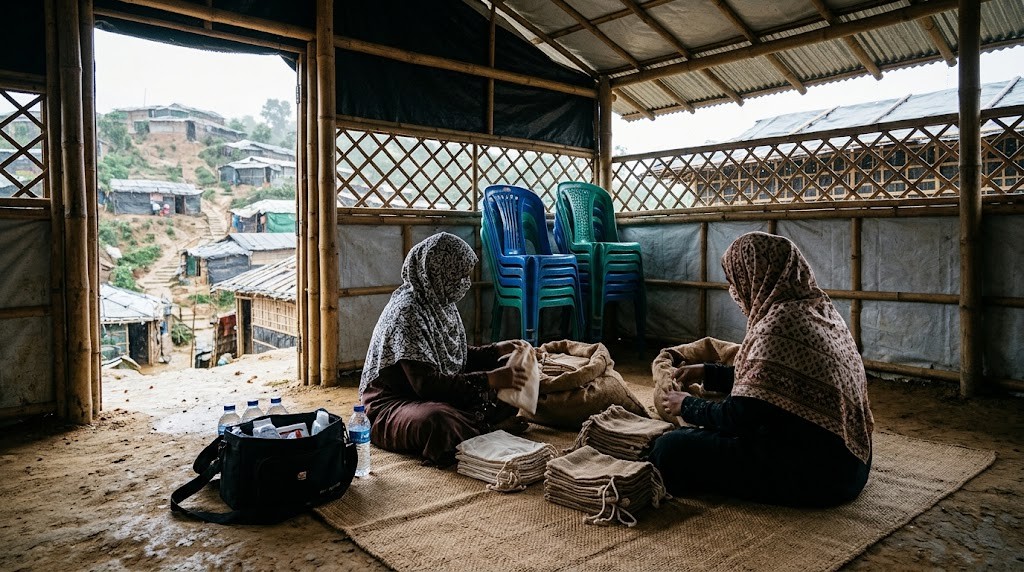
| Dignity kits given to women and girls after the disasters | 2,753 |
| Visits to 127 adolescent and youth centres and community learning facilities | nearly 140,000 |
What UNFPA did
UNFPA says it kept sexual and reproductive health services running, sent mobile medical teams, and arranged emergency transport for high-risk pregnant women and obstetric emergencies. Gender-based violence caseworkers and volunteers gave psychosocial first aid and referrals, and women-friendly spaces and youth centres were used as temporary shelter during the floods.
Why it matters
The report lands as the Rohingya response faces tighter budgets. For protection, health and women’s rights organisations in Cox’s Bazar, the rise in reported violence and the damage to facilities point to where gaps are likely to open next monsoon if services shrink. Planning for the 2027 response, including how many women-friendly spaces stay open and whether facilities are rebuilt to withstand landslides, will shape what women and girls in the camps can rely on.
Related: Rohingya women make 14,666 hygiene kits as aid cuts bite.
Sources
Image: AI-generated illustration, not a photograph of real people or places.
Spotted an error? Tell us and we will correct it. Read our editorial standards.