News · Economy and poverty · Source: World Bank, 6 October 2026
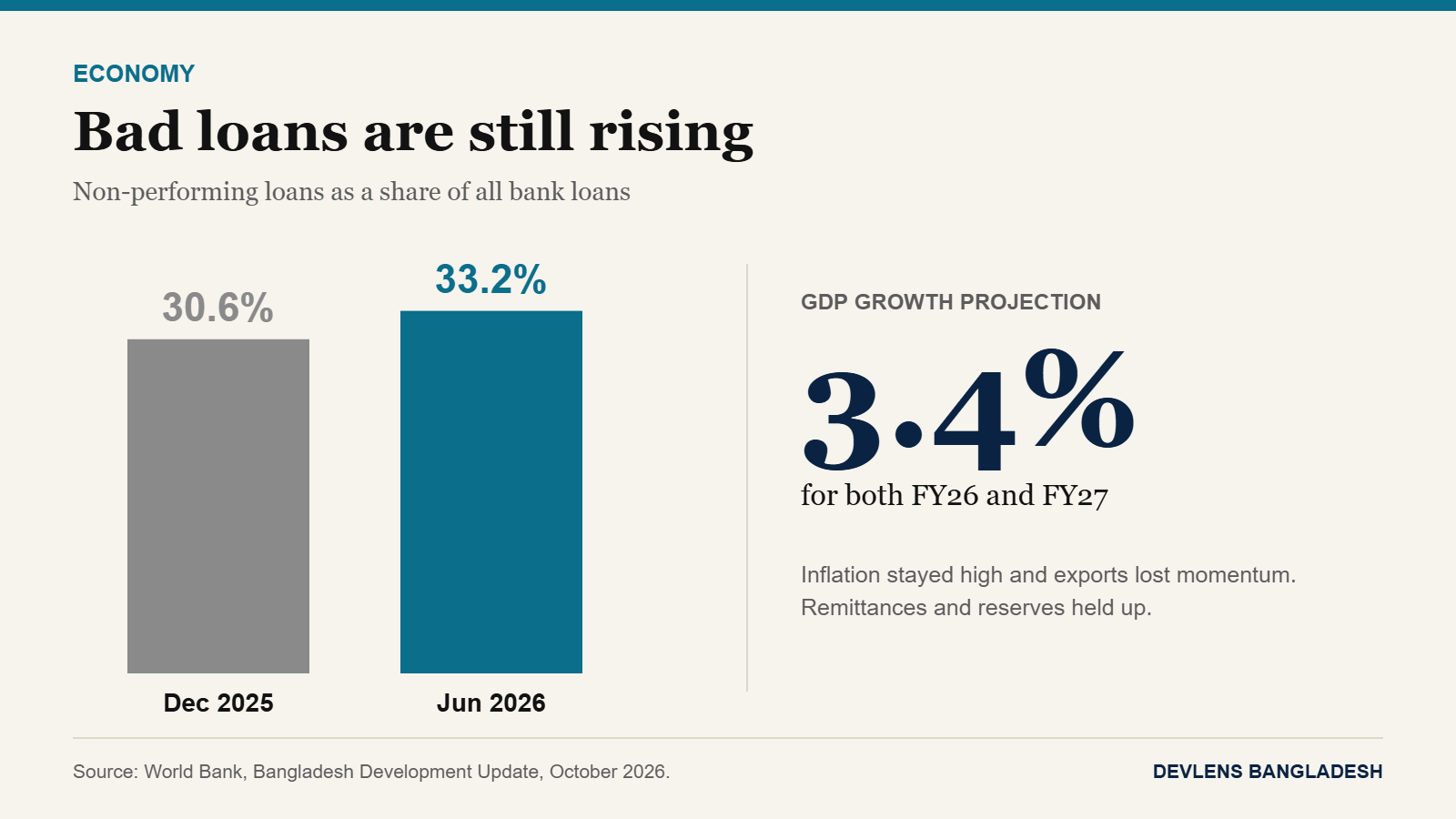
The World Bank released its latest Bangladesh Development Update on 6 October 2026. It projects GDP growth of 3.4 percent in both FY26 and FY27.
What the report found
- Investment softened, exports lost momentum and inflation stayed high, cutting household purchasing power and raising costs for businesses.
- Strong remittance inflows and improving foreign exchange reserves gave the external sector some resilience.
- The non-performing loan ratio rose to 33.2 percent in June 2026, up from 30.6 percent in December 2025.
- Development spending contracted sharply, which the report attributes to a cautious approach to public investment.
The Bank lists its priority reforms as restructuring and resolving weak banks, improving energy security, raising domestic revenue, improving the business environment and diversifying exports.
Why it matters for the sector
This edition carries the subtitle Make Subsidies and Social Protection Work Better for the Poor. Slower growth, persistent inflation and a fall in development spending all point to more pressure on the households that NGO, UN and government programmes serve, and to tighter room for public co-financing. Teams working on cash transfers, livelihoods and social protection will find the report’s distributional analysis directly relevant to programme design and advocacy.
What to watch
- Whether the government revises its FY27 spending plans and social protection allocations.
- Progress on bank resolution, which the report treats as central to recovery.
- The next update, which the World Bank publishes twice a year.
Sources
Main image: Motijheel, Dhaka’s financial district. Photo: Kabirulislam86 / Wikimedia Commons, CC BY-SA 4.0.
Topics: governance · livelihoods economic empowerment · national · poverty · poverty reduction decent employment · power and energy · social protection
Spotted an error? Tell us and we will correct it. Read our editorial standards.